Part 1: Airport Flooring Specification Guide — Why Materials Fail (and What Works)
Airport Flooring Specification Guide — Why Materials Fail (and What Works)
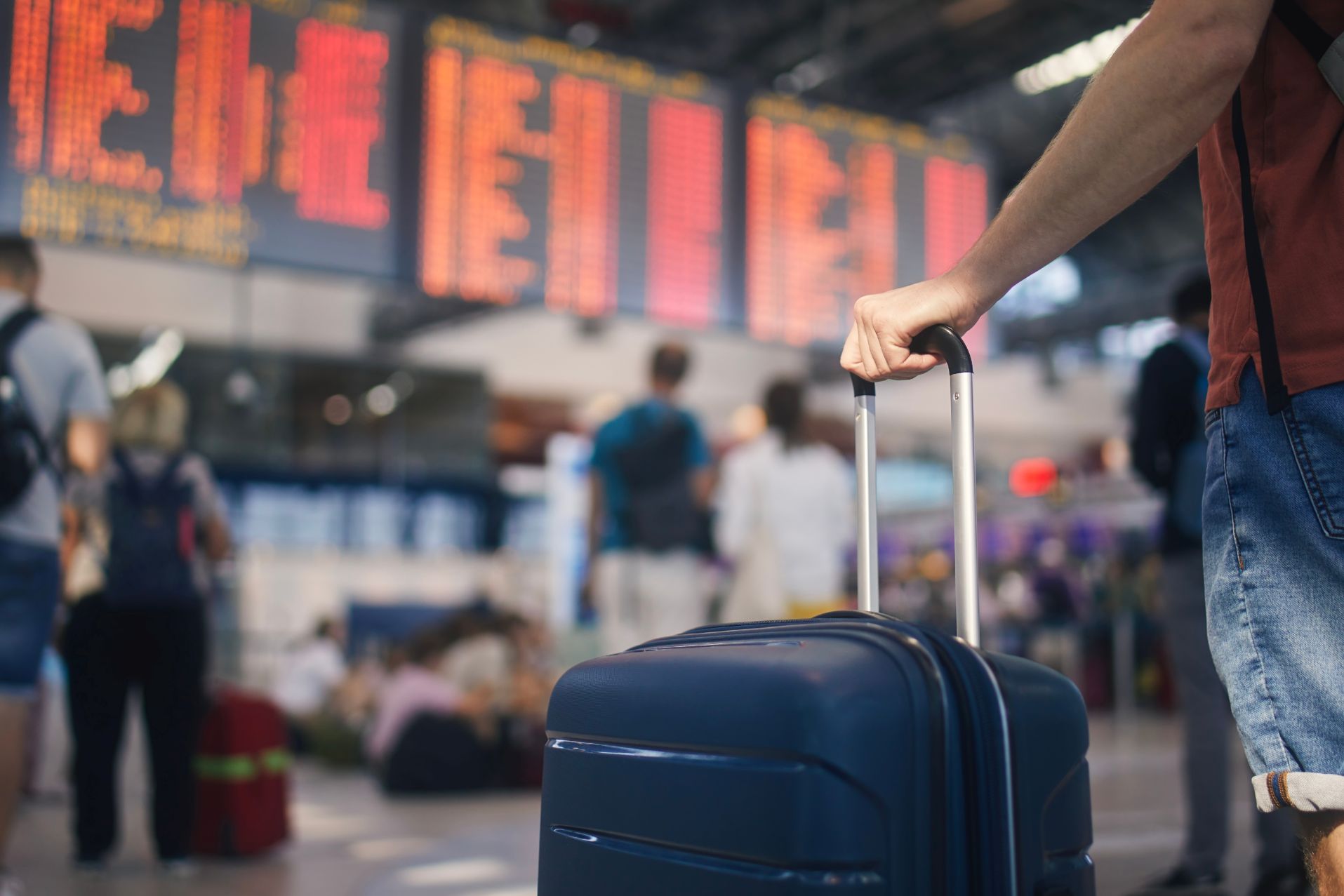
Airports don’t have peak times — they operate under constant pressure. Passenger flow, rolling luggage, cleaning cycles, security demands, and 24/7 use combine into a single condition: sustained stress with no recovery window. This is where most flooring specifications are quietly eroded and the issue here is structural.
Materials are often chosen based on how they present at handover — visual uniformity, initial cost, compliance checklists — rather than how they behave under continuous load over years.
Airports expose that gap faster than almost any other building type and if a material can’t handle wheels, it won’t survive footfall. Foot traffic is distributed; wheeled traffic is concentrated, repetitive, and abrasive. It creates micro-failure points — seams, joints, weak bonds — these can create visible degradation within months, not years and more seams means more potential failure points.
Every seam is a potential ingress point for moisture, dirt, and mechanical stress. In high-traffic concourses, seam failure is often the first visible sign that the specification was not robust enough. This is where rubber flooring — particularly in wide roll formats — changes the equation. Fewer seams, continuous surfaces, and elastic resilience under load mean the material absorbs stress rather than fragmenting under it.
But durability alone is not enough; the real test of flooring starts after handover: cleaning regimes, contractor variability, and operational constraints begin to act on materials immediately. If the system — not just the product — hasn’t been considered, potential failure points are multiplied and this is why system compatibility matters.
Artigo rubber flooring has been repeatedly used in high-demand environments because it is not treated as a standalone product. It is tested and proven in combination with UZIN systems, allowing for predictable installation performance. And more importantly, this allows for pre-refurbishment site visits and substrate assessment before work begins —critical in airports where downtime is not an option. Mistakes made during installation don’t just cost capital; they disrupt operations, delay programmes, and create public-facing failures.
The first and last question is: does the material still perform under continuous load, cleaning, and use without requiring intervention?
Rubber, when specified correctly, answers that question with consistency because durability isn’t a feature — it’s the baseline standard of the product. Its value lies in reducing failure points, simplifying maintenance, and ensuring that the floor behaves the same way on day 1,000 as it did on day one.
Airports expose weak flooring. They also make strong choices clear.
We believe that each and every project is unique so please contact us to discuss your project and its requirements. Our blog is written for information purposes only.